It all started with an email. Italy’s constant balancing act, even against spam
Can the bizarre email whose sender’s name evoked a former president of the USSR be described as a cyberattack? Strictly speaking, probably not, but that makes it no less significant. This week, thousands of schools across Italy were evacuated following a message sent from Taiwan threatening a gruesome fate for the Italian population and schoolchildren, many of them very young. The ensuing debate focused on two main questions: whether evacuating classrooms is always the right response, and whether Italy can cope with the hybrid warfare it has recently faced, including far more serious attacks, such as those targeting refrigeration units s in France that caused bags of blood to spoil. Deciding whether to evacuate children over a message that looks like spam, however odd, certainly calls for strategic and security expertise suited to today’s digital environment. And it is entirely legitimate to ask whether hybrid warfare has reached a troubling level of complexity. Most of us cannot judge that, this writer included, but that does not absolve us of asking the right questions. If this really was an act of hybrid warfare, what should we make of the fact that it came from Taiwan? And if hybrid warfare is intensifying, why is Italy bearing the brunt, and what can it do to reduce its exposure? Beyond the inevitable armchair speculation about who is behind it, the impression is that this is another chapter in geopolitical tensions. Italy, albeit quietly, openly aligned itself with the Western bloc after the outbreak of the war in Ukraine. That also carries weight in relationships extending beyond Kyiv. Is this writer therefore endorsing the email sender’s claimed identity? No. Nor is the intention to indulge in pointing fingers at those already selling Italy cybersecurity equipment who would like to speed up the adoption of updates—a theory whose circulation has been inversely proportional to the evidence supporting it. Yet choosing sides, however noble in political terms, has consequences.
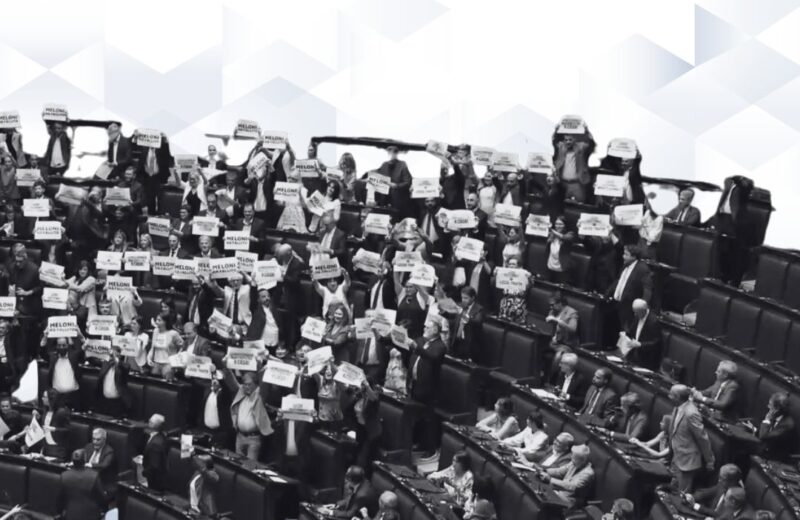
We are far from rushing to conclude that the government has done little to prevent these repeated attacks. The relevant agencies are working, and were already working, on prevention, while the intelligence services hold information they rightly do not disclose. It will now be interesting to see how the government handles the issue and seeks to step up its domestic security agenda. Including opposition parties in the meetings was certainly an excellent gesture. We know that dialogue between the governing majority and the opposition can never be taken for granted. We are seeing that again in the run-up to the budget’s approval, with the usual clashes and accusations, although fortunately this time there is no talk of a bill closed to amendments. The government could still call a confidence vote once the bill reaches the floor, and averting that possibility would be a positive outcome for democracy and parliamentary scrutiny.
In the background are the US midterm elections. Interesting, up to a point. Even less decisive as a guide to the 2028 presidential election. Still, the vote offers some clues, and the subsequent statements provide another signal of interest to us: the Meloni government no longer has friends, only allies. That strikes us as a welcome sign of maturity from Italy’s longest-serving government.