Budget and consensus: a Test of Resilience
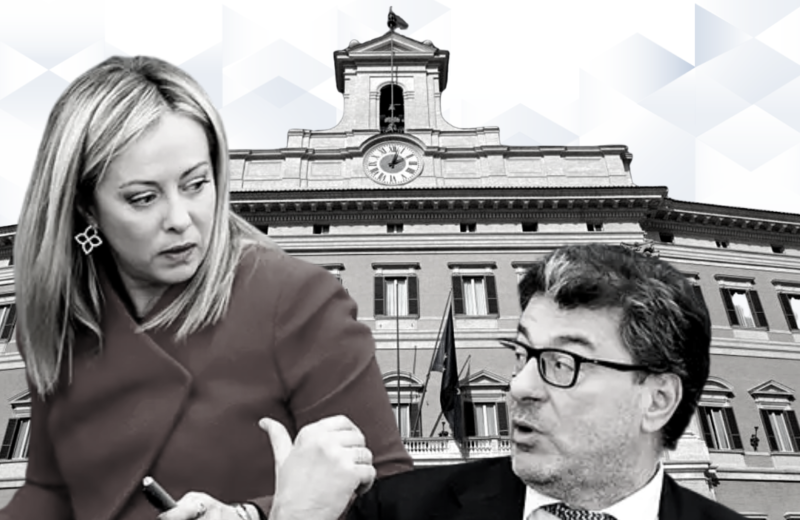
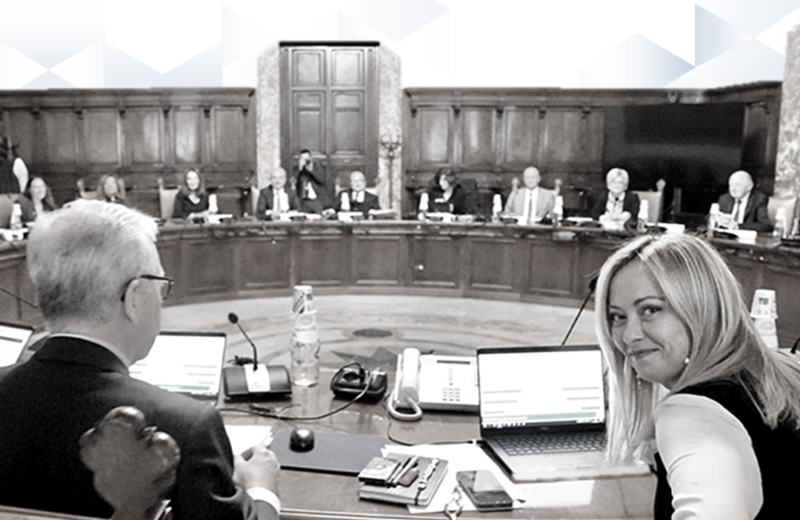
With the start of hearings in the Budget Committee, the parliamentary debate on Italy’s 2026 budget law has officially begun. A week of technical and political confrontation has offered the first real test of the government’s economic strategy — a delicate balance between fiscal caution and criticism over the distribution of the tax burden. If the recent justice reform was an “identity” measure, the budget law is instead a test of concreteness and sustainability.
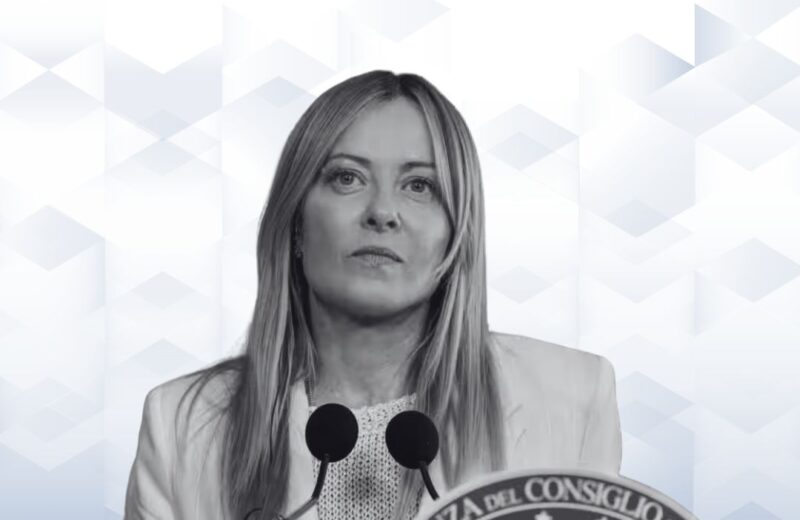
At the heart of the debate lies the issue of taxation. Prime Minister Giorgia Meloni’s government has confirmed the reduction of the intermediate IRPEF income tax rate from 35% to 33%, a measure affecting roughly ten million middle-class taxpayers. It is a strong political signal, yet with limited economic impact: simulations estimate an average annual benefit of about €250–300, with more substantial gains for higher-income groups.
In its preliminary hearing, the Court of Auditors highlighted structural concerns, warning that projected revenues from tax amnesties and the “debt relief” scheme for unpaid tax bills appear overly optimistic and could jeopardize the sustainability of public finances. Both the Bank of Italy and the national statistics agency ISTAT echoed this view, noting that the IRPEF cut has only a marginal effect on inequality and little influence on household purchasing power. The message is clear: this is a politically symbolic rather than transformative measure — one meant to reinforce the government’s narrative of “lower taxes,” yet constrained by European fiscal rules that demand prudence and discipline.
The stated goal of bringing the deficit below 3% of GDP by 2026 underscores this balancing act. Brussels remains a crucial reference point — for both the Stability Pact and the implementation of the National Recovery and Resilience Plan (PNRR). Italy seeks to present itself as fiscally credible to markets and European institutions, but the tension between external discipline and domestic consensus remains evident.
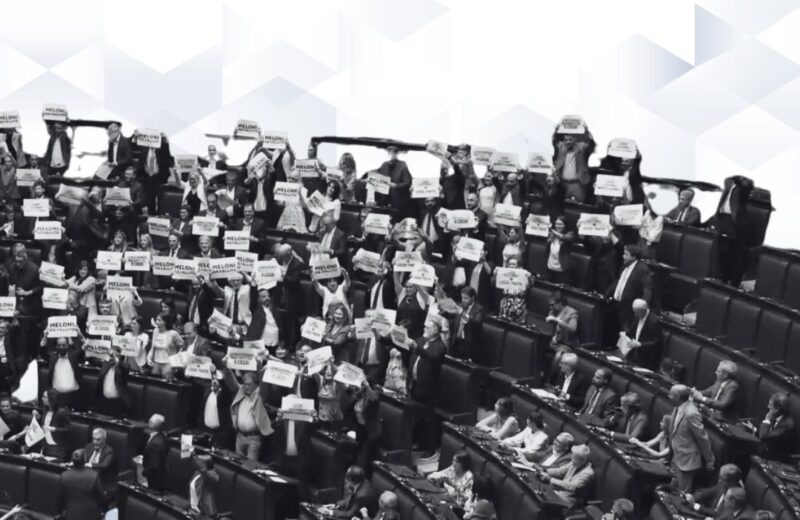
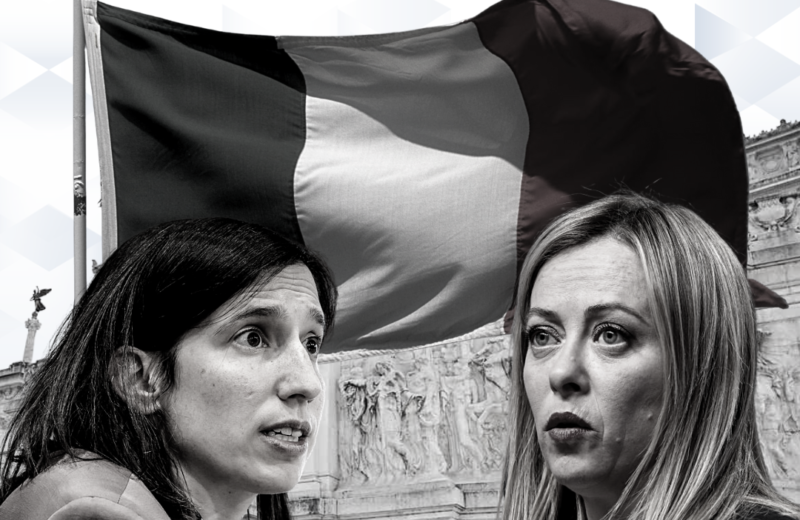
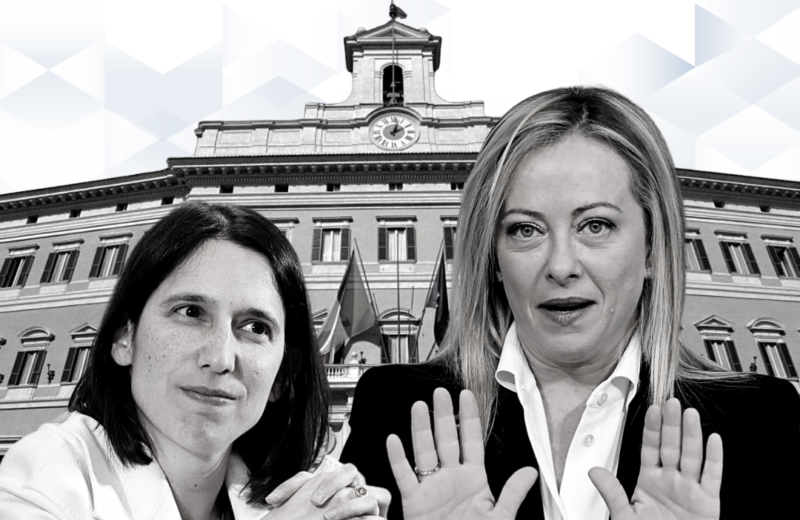
Politically, the budget deepens the divide between government and opposition. The majority frames it as an “expansive and redistributive” fiscal policy; the center-left counters that it is regressive, favoring upper-middle incomes while shifting costs onto the weakest segments of society. Meanwhile, early union mobilizations — including strikes in transport and public services — reveal a growing social unease.
The government is walking a narrow line: it must safeguard international credibility without losing domestic trust, curb the deficit without breaking its “lower taxes” pledge, and support growth while productivity stagnates and inflation eases only slowly. This is not just a battle of numbers, but of perception — a test of the government’s political stability and effectiveness.
After the justice reform, the budget law becomes the second pillar of Meloni’s governing narrative: if the first aimed to redefine the balance of powers, this one seeks to consolidate public confidence. Yet between European constraints and internal expectations, the real challenge lies in bridging the gap between the image of change and its tangible impact on the country’s economic life.