Between political tactics and global constraints: the narrow path Italy must navigate
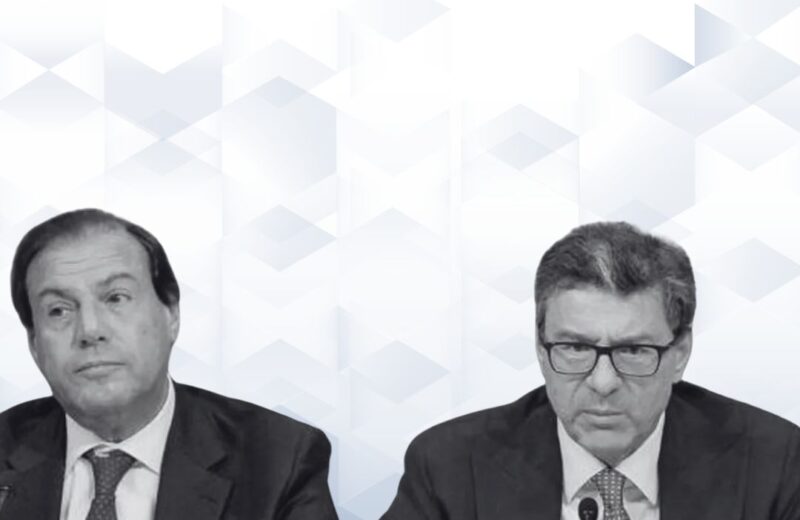
Italy’s political week unfolds along a line of apparent normality, marked by adjustments and internal rebalancing, yet it takes place within a context that increasingly limits the autonomy of those dynamics. The Council of Ministers has closed the chapter on junior ministers, filling vacant positions and restoring a degree of equilibrium within the government after recent tensions. Paolo Barelli takes on Relations with Parliament, Mara Bizzotto moves to the Ministry of Enterprises and Made in Italy, and Massimo Dell’Utri joins the Foreign Ministry. They are joined by two members of Brothers of Italy: Alberto Balboni at Justice and Giampiero Cannella at Culture. These appointments respond to both political and territorial considerations, allowing the executive to consolidate its operational structure.
At the same time, the issue of succession to Paolo Savona at Consob remains unresolved. The candidacy of Federico Freni continues to be debated, with attention focused not only on political balance but also on institutional profile and the need to ensure the authority’s independence. In parallel, the situation surrounding Giuseppina Di Foggia appears to be moving toward a resolution, as she signals her willingness to forgo severance pay in order to assume the chairmanship of Eni, bringing a period of uncertainty to a close within one of Italy’s key state-controlled companies.
These developments, while relevant at the domestic level, are unfolding within a broader economic framework that is increasingly shaping national decision-making. According to the Fondo Monetario Internazionale, global growth is slowing to around 3.1%, while inflation remains persistent. This combination narrows the space for expansionary policies and calls for careful management of public finances. In this context, Italy’s deficit—slightly above the 3% threshold—takes on a significance that goes beyond the numerical figure, affecting the country’s perceived credibility and its room for maneuver within the European framework.
What emerges is a growing interdependence between internal dynamics and external constraints. Political choices continue to respond to balance and coalition logic, but they are increasingly shaped by an economic environment that leaves less room for flexibility. It is within this interaction that the effectiveness of government action is measured, as it seeks to maintain internal stability while strengthening credibility in a complex and evolving international landscape.