Budget Law and the delicate balance of fiscal policy
The budget law is the cornerstone of a government’s economic policy. Each year, within very tight deadlines, it must translate political priorities, fiscal constraints, and the demands of multiple stakeholders—European institutions, ministries, economic sectors, and political parties—into concrete measures. It is therefore not surprising that, also in 2026, debate around the budget has been marked by tensions within the governing coalition and by a technical process that leaves limited space for political maneuvering.
The controversy over the taxation of short-term rentals is emblematic. The measure was approved by the Council of Ministers as part of the overall package but was immediately criticized by Forza Italia, the League, and, in more cautious terms, by Brothers of Italy. Similar scenarios occurred in previous years with other measures: the increase in the RAI license fee, the extension of the digital tax, and higher excise duties on fuel and tobacco. The pattern is recurring: unanimous approval in the Council of Ministers, followed quickly by disavowals once public criticism emerges.
This mechanism should not be seen purely as political opportunism. In practice, ministers often vote on a text they only partially know. The complexity of the budget law—this year spanning 137 articles and over a hundred pages of technical and legal references—means that only the most significant measures are discussed in detail. The rest is shaped by the Ministry of Economy and Finance, which centralizes the drafting process and coordinates with the Prime Minister’s office, oversight bodies such as the Bank of Italy and the European Commission, as well as macroeconomic data updates from ISTAT.
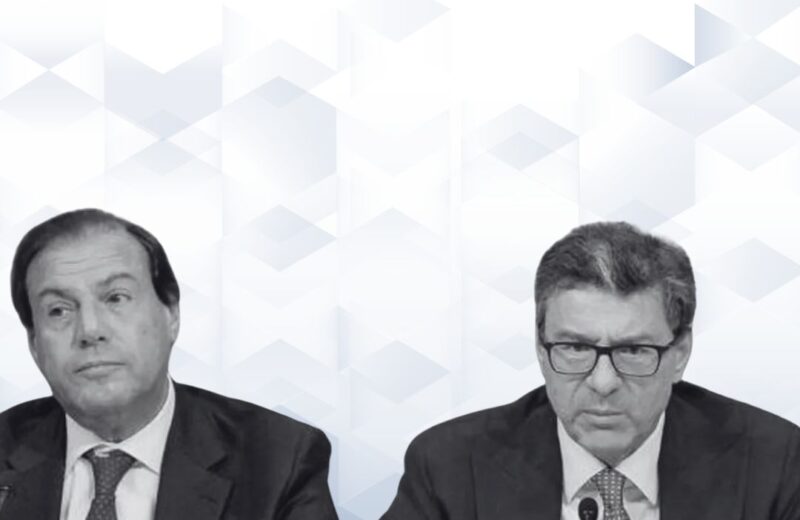
The role of the Minister of Economy is therefore decisive. Giancarlo Giorgetti has chosen a strongly centralized approach, limiting the influence of coalition parties and retaining responsibility for including even the most controversial measures. According to several interpretations, some “problematic” provisions are introduced deliberately, to be used later as bargaining chips during parliamentary negotiations. In this way, the budget becomes a work in progress, with the text approved by the Council of Ministers serving more as a starting point than a final version.
This method has both advantages and drawbacks. On one hand, it ensures compliance with European deadlines, preventing internal disputes from delaying the submission of the Draft Budgetary Plan to Brussels. On the other, it creates the impression of a government approving measures without full awareness, complicating communication and exposing leaders to criticism. Citizens thus observe a recurring sequence: triumphant announcements when the budget is presented, followed by clarifications, corrections, and disputes in the following weeks.
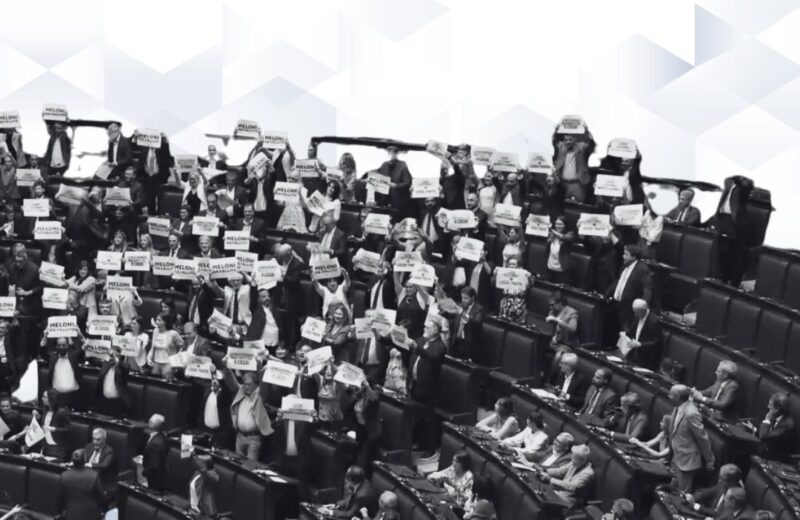
Parliament, in this context, becomes the arena for a “second stage” of the budget law. It is there that controversial measures are debated, amended, or withdrawn, often as a result of negotiations within the majority or pressure from interest groups. This makes the Italian budget process less linear than in other European countries, but functional to a political system where coalition governments must balance diverse and sometimes conflicting demands.
The 2026 budget, therefore, appears as a complex and evolving document. It combines tax reductions and measures to support social spending with revenue-raising interventions targeting specific sectors, inevitably fueling political debate. In the coming weeks, Parliament will shape the final version of the law, with adjustments reflecting both fiscal constraints and political negotiation. Once again, the Italian budget law confirms its dual nature: a technical instrument, but also a political arena where different interests converge and are reconciled.