France, Europe, and the fragile thread of stability
France has just experienced one of its periodic political tremors. Prime Minister François Bayrou’s government collapsed under the weight of a near-plebiscitary no-confidence vote: 364 against, 194 in favor. At the root was an austerity package that called for deep spending cuts and even the suppression of two public holidays—a plan designed to reduce public debt, but which instead reduced the patience of parliamentarians.
Emmanuel Macron’s response was swift: the appointment of Sébastien Lecornu as the new prime minister. Young, energetic, with ministerial experience, Lecornu now faces a daunting mission: leading a minority government in a fragmented Assembly, where every vote risks becoming a referendum on the survival of his administration. “Compromise” is the word of the day—though easier to pronounce than to achieve.
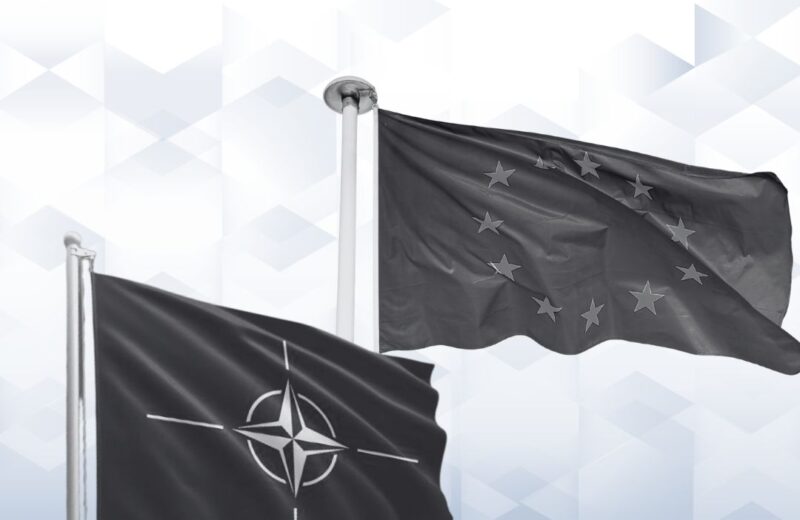
Yet the French upheaval cannot be read in isolation. Just days later in Brussels, Ursula von der Leyen delivered her 2025 State of the Union address. It was a dense, almost urgent speech: Europe, she argued, must learn to act as a geopolitical player in an increasingly unstable world. She spoke of common defense, strategic autonomy, of a Union that cannot simply react, but must be able to propose and to lead.
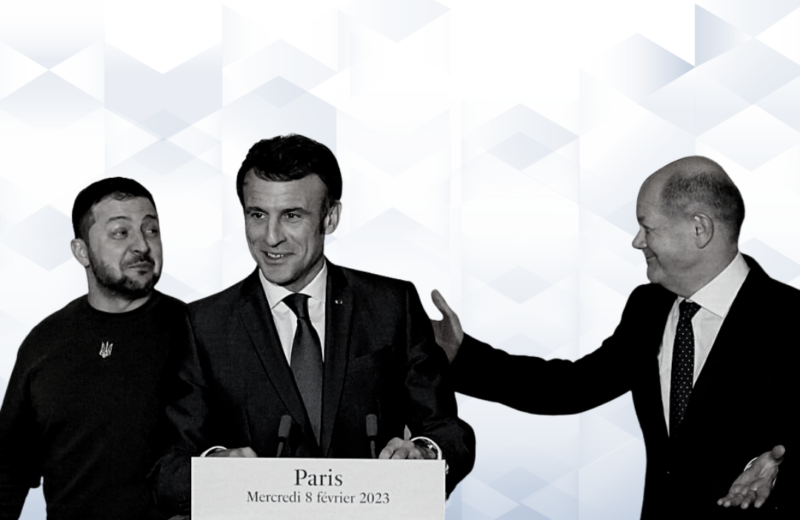
The irony is stark: while the Commission President calls for unity, stability, and strategic vision, one of the EU’s pillars—France—is grappling with yet another bout of political uncertainty. The contrast feels almost symbolic: Europe urging cohesion, while one of its core states struggles to keep its own balance.
This is not merely a national issue. France, alongside Germany, is the engine behind many key EU initiatives. If Paris is preoccupied with political survival, it becomes harder to provide the leadership needed to push forward joint policies on defense, energy, and the economy. And these, precisely, were among von der Leyen’s central themes: an EU capable of acting with one voice, without being paralyzed by internal divisions.
In this light, France’s crisis takes on a meaning that extends beyond its borders. It is not simply the fall of a government, but a test of the resilience of European institutions. Can Paris regain stability in time to play its role? And can Brussels persuade its citizens that the Union can be a safe harbor in global storms, when some of its most influential members are themselves adrift?
The answer, as always, will depend on politics: on Lecornu’s ability to govern without a solid majority, on Macron’s determination to preserve his agenda, and on the willingness of other European partners to support—not just in words—the project of a “more assertive Europe” von der Leyen invoked.
Ultimately, both the French drama and the State of the Union speech tell the same story: that of a continent caught between global ambitions and internal fragilities. European stability today is measured not only in treaties or solemn declarations, but in the ability of national governments to weather daily storms. And France, with its chronic instability, reminds us that the political heart of Europe often beats to an irregular rhythm.